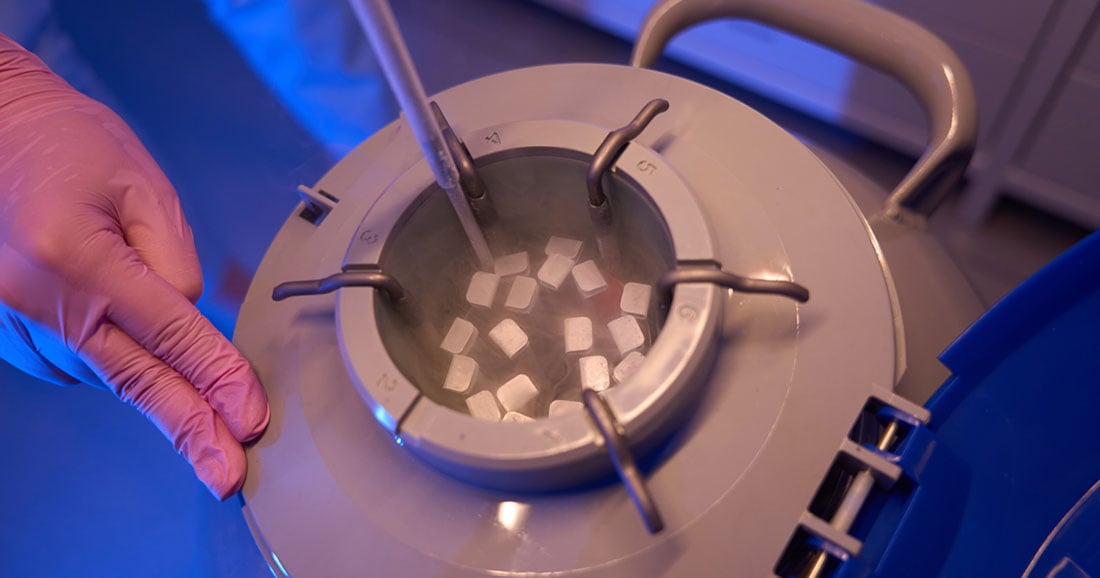

Cell and gene therapies (CGT) represent a groundbreaking frontier in modern medicine, offering hope for treating complex diseases that were once considered incurable. Central to the success of these therapies is the ability to maintain the viability and functionality of living cells throughout manufacturing, storage, and delivery processes. This is where cryopreservation steps in—a critical technology enabling the long-term storage of living cells by freezing them at ultra-low temperatures.
In this blog, we’ll explore the science of cryopreservation, review common techniques, and examine their vital role in the CGT cold chain, ensuring that life-saving therapies reach patients in optimal condition.
What Is Cryopreservation?
Cryopreservation is the process of preserving cells, tissues, or even organs by cooling them to sub-zero temperatures, typically using liquid nitrogen at -196°C or freezers operating between -80°C and -150°C. At these temperatures, biological activity slows dramatically, essentially putting cells in a state of suspended animation where metabolism and biochemical reactions halt, preventing degradation.
The main goal is to maintain cell viability and function upon thawing, which is crucial for the success of cell therapies such as CAR-T cells, stem cells, and gene-modified cells.
Key Cryopreservation Techniques
1. Slow Freezing
Slow freezing is the traditional method used in cryopreservation, where cells are gradually cooled at a controlled rate—usually around 1°C per minute—to prevent the formation of intracellular ice crystals. Ice crystal formation inside cells is highly damaging, causing mechanical injury and osmotic stress.
By slowly lowering the temperature, water migrates out of cells, reducing the risk of ice formation within them. Cells are typically suspended in a cryoprotectant solution (often DMSO - dimethyl sulfoxide), which helps protect membranes and proteins during freezing.
Advantages:
- Well-established method with proven cell viability rates.
- Suitable for a variety of cell types.
Limitations:
- Time-consuming process requiring specialized equipment (controlled-rate freezers).
- Potential toxicity from cryoprotectants like DMSO
2. Vitrification
Vitrification is an ultra-rapid freezing technique that transforms the cell suspension into a glass-like solid without ice crystal formation. This is achieved by very fast cooling rates and higher concentrations of cryoprotectants.
By avoiding ice altogether, vitrification can enhance post-thaw viability and reduce cryoinjury.
Advantages:
- Minimizes ice damage, improving cell recovery rates.
- Faster than slow freezing.
Limitations:
- Requires higher cryoprotectant concentrations, increasing toxicity risk.
- More technically challenging to implement at scale.
Cryopreservation’s Impact on the CGT Cold Chain
The cold chain refers to the temperature-controlled supply chain that preserves and transports temperature-sensitive products like cell therapies. Cryopreservation is integral to this process because it enables long-term storage and stable transport of living cells.
Ensuring Product Integrity
Freezing cell therapies with cryopreservation techniques maintains cell viability during the entire cold chain—from manufacturing facilities to clinical sites. Without proper freezing and storage, cells may degrade, lose potency, or become contaminated, compromising patient outcomes.
Logistics and Scalability
Cryopreservation allows for inventory management and batch production of therapies. By freezing cell batches, manufacturers can create “off-the-shelf” therapies that are ready to ship, reducing lead times.
However, maintaining the cold chain requires sophisticated logistics infrastructure:
- Use of liquid nitrogen dry shippers or ultra-low temperature freezers during transport.
- Continuous temperature monitoring and validation to avoid temperature excursions.
- Trained personnel to handle thawing and administration processes correctly.
Regulatory and Quality Considerations
Regulatory agencies closely monitor the cold chain for CGT products. Appropriate cryopreservation protocols and documentation are essential to meet Good Manufacturing Practices (GMP) and ensure product consistency, safety, and efficacy.
The Future of Cryopreservation in Cell and Gene Therapy
As CGT continues to evolve, so does cryopreservation technology. Advances such as automated freezing systems, novel cryoprotectants with reduced toxicity, and improved vitrification protocols aim to enhance cell survival and simplify the cold chain.
Furthermore, innovations in real-time temperature monitoring and data analytics are optimizing cold chain logistics, reducing risks of product loss and improving patient access to therapies worldwide.
Conclusion
Cryopreservation is more than just freezing cells—it’s a sophisticated science that underpins the entire cell and gene therapy cold chain. By preserving cell viability and function, cryopreservation ensures that advanced therapies remain effective from lab to patient.
Understanding these freezing techniques and their impact on the cold chain is essential for stakeholders across manufacturing, logistics, and clinical administration to deliver the next generation of life-saving treatments reliably and safely.
At Biocair, we’re proud to support the advancement of personalized medicine through expert life science logistics. Our solutions are designed to meet the unique needs of CGT, combining precision, responsiveness, and an unwavering focus on patient safety. From the first mile to the last, we help bridge science and care—one patient at a time.
Related Contents:


Biocair is a global logistics provider specializing in pharmaceutical, biotechnology and life sciences supply chain solutions with nearly 40 years of experience. By assembling a team of best-in-class industry experts in quality, cold chain and regulatory compliance, Biocair focuses on providing the most comprehensive time-sensitive and temperature-controlled solutions.